Why kids learn more fixing a broken game than following steps
There’s a kind of coding lesson that looks great on paper: step one, drag this block. Step two, drag that one. Step ten, press play and your game works. A child can finish it without understanding any of it.
We built Game Creators Club around a different idea: kids learn more from fixing a broken game than from following steps to build one.
A broken game has a question in it
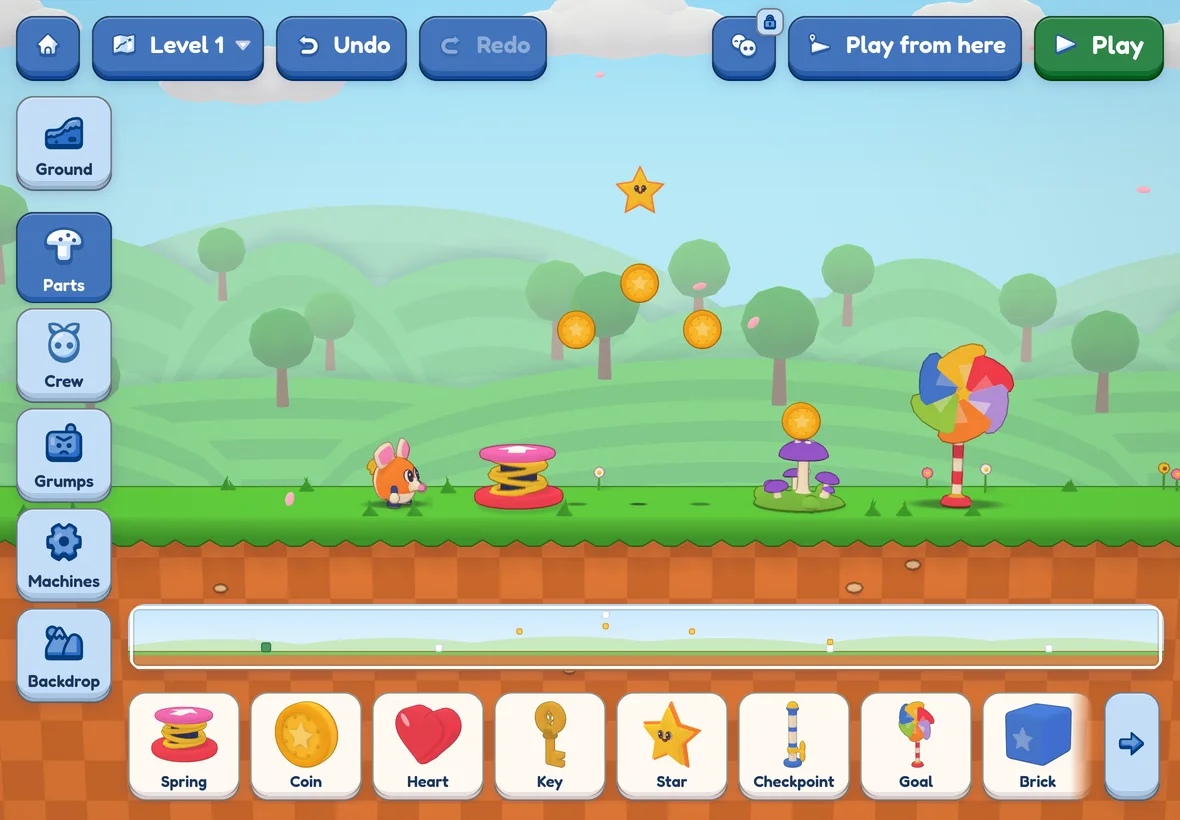
When something is broken, a child wants to know why. The spring throws Kip too low and he drops into the gap. The gate opens without the key. Those are puzzles with an answer, and they make a child look closely in a way that “now drag this block” never does.
That looking is the skill. Professional programmers spend much of their time reading code that almost works and finding the one thing that’s wrong.
You can see the rules work
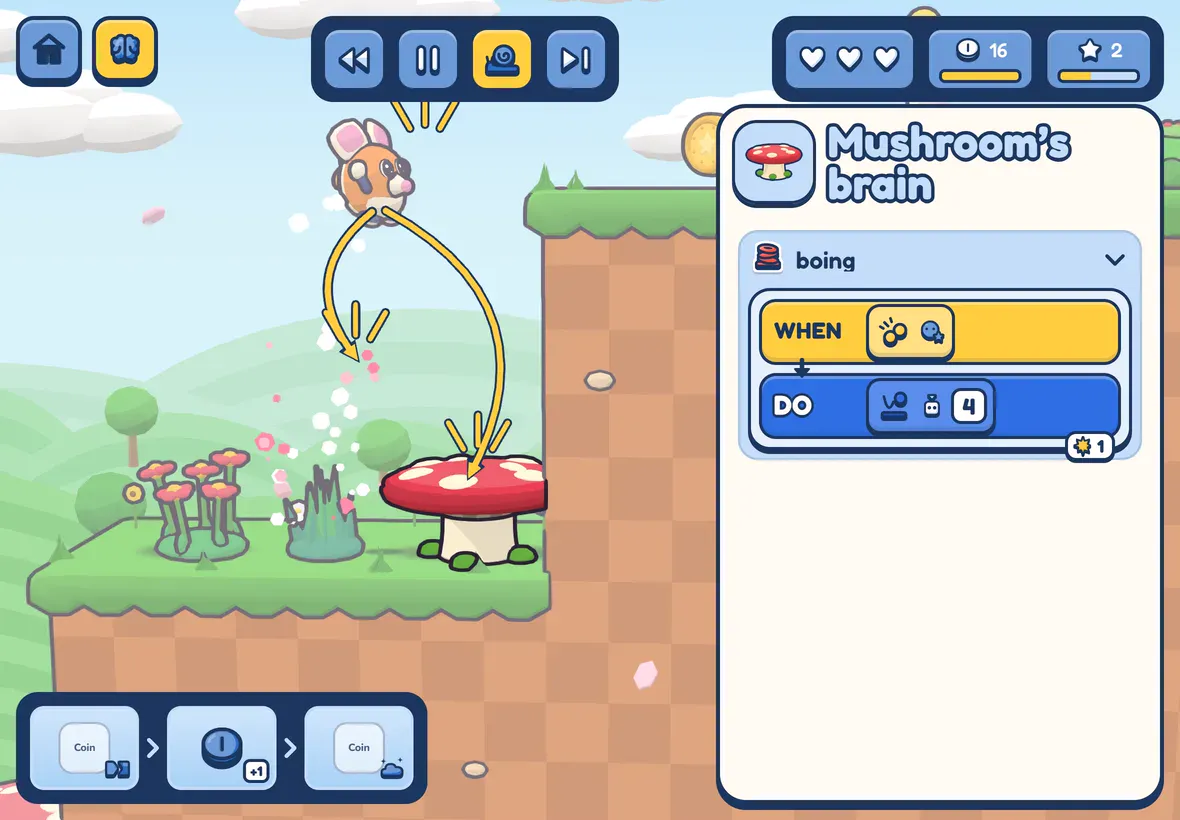
Fixing only works if you can see inside. So every game has a brain, its rules, and a child can open it at any time and watch each rule light up as it fires. When Kip bounces, the mushroom’s rule glows. When a check fails, its lamp turns red.
Watching the rules run is how a child builds a picture of what the game is doing, and where it goes wrong.
Predict, then try
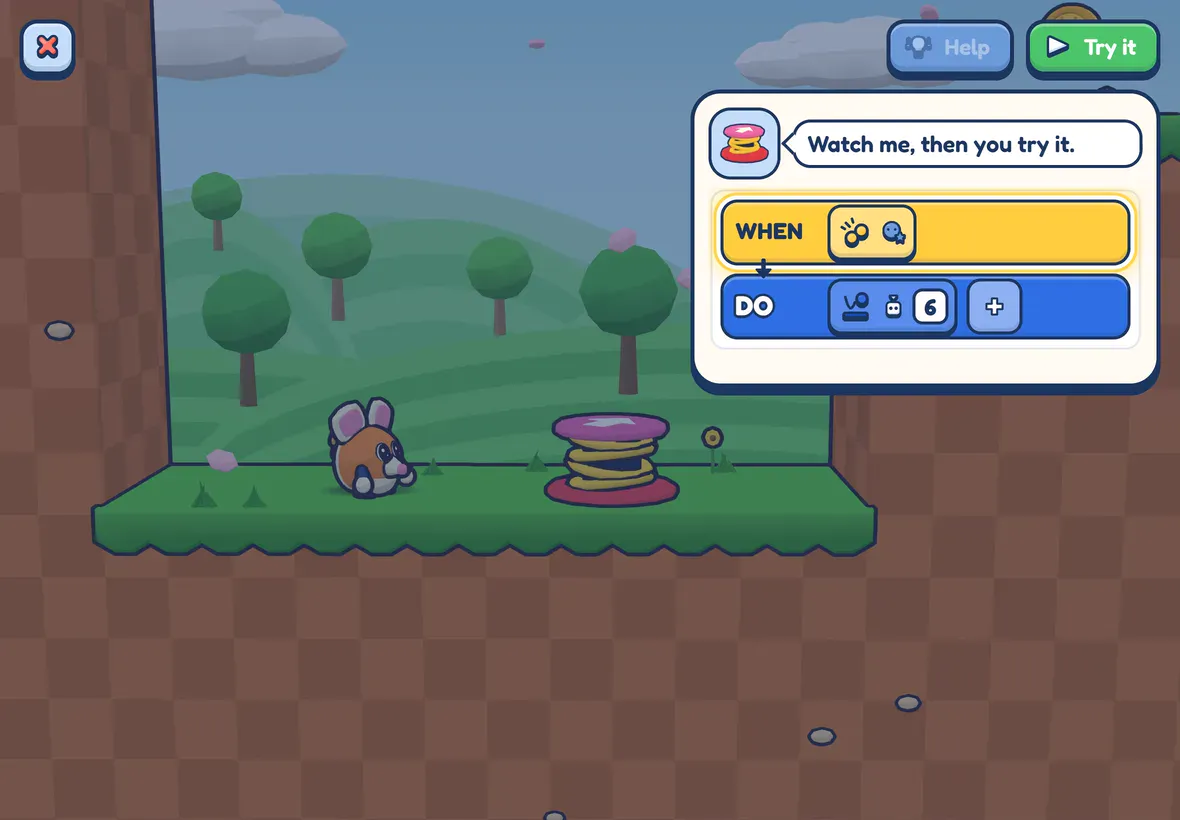
Before a fix, the lesson asks for a guess: which number reaches the ledge, 3, 6 or 10? A guess gives the child something to compare against. When the replay shows 3 falling short and 10 bonking the ceiling, they aren’t just told the answer. They see their own idea tested.
A fair test, every time
When the child changes something, the game tests it the same way every time: the same walk, the same jump in the same spot. Only the thing they changed is different. That’s a fair test, the heart of good science and good debugging, and the child learns it by doing it, not by being told.
The game is the judge
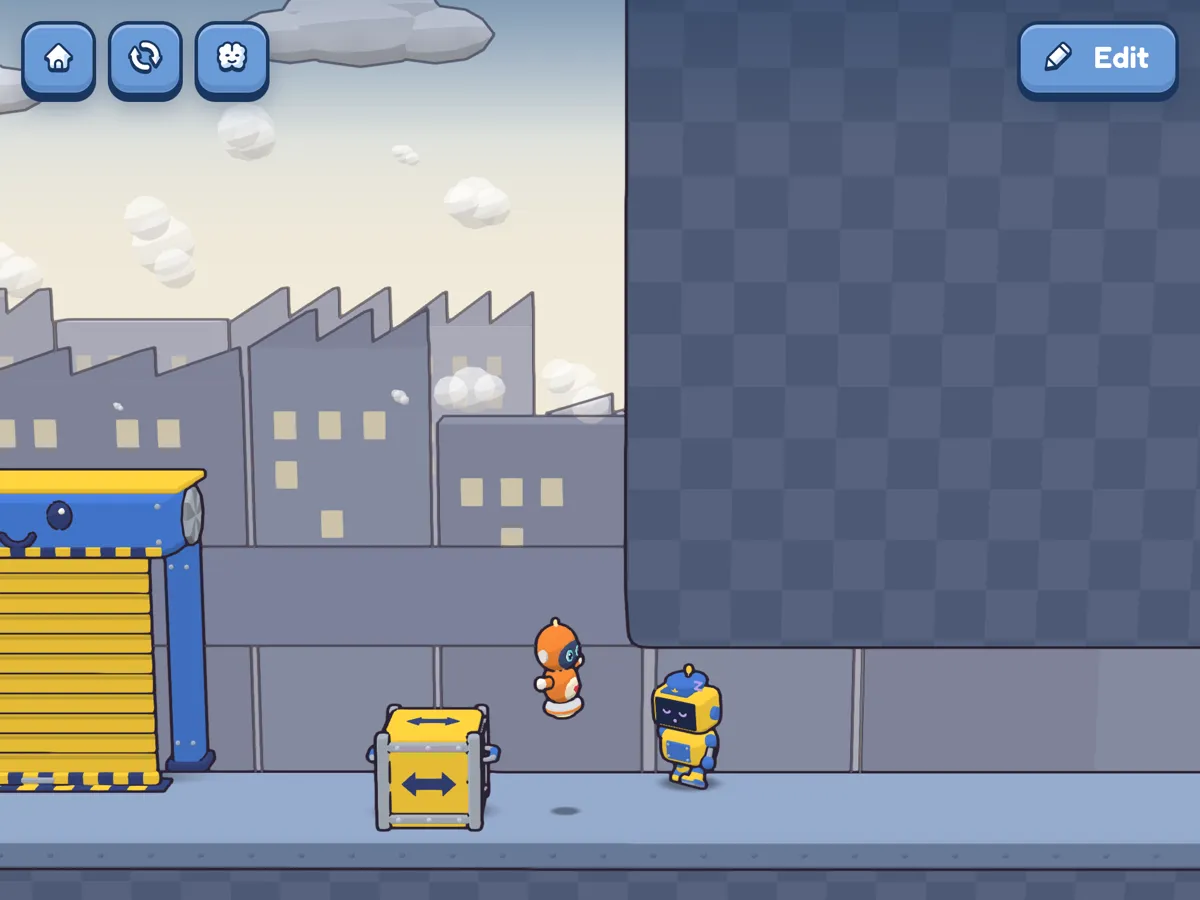
There’s no quiz at the end. The fix is right when the level works: Kip lands on the cloud, the gate stays shut without the key. A child who fixes a level knows they did, because they watched it happen.
Then they make something
Fixing builds understanding. Making shows it. After every fix, the child takes the same idea into their own copy of the game and uses it however they like. That’s when an idea stops being something they were shown and becomes something they own.