Coding for 5-year-olds: what actually works
A five-year-old can’t type a for-loop. Most can’t read a sentence on a screen yet. That doesn’t mean they can’t program. It means the usual tools weren’t made for them.
We built Game Creators Club for kids 5 to 9, and almost every choice in it came from one question: what does a young child need to change how a game works, on their own, with nobody reading the screen to them?
Pictures before words
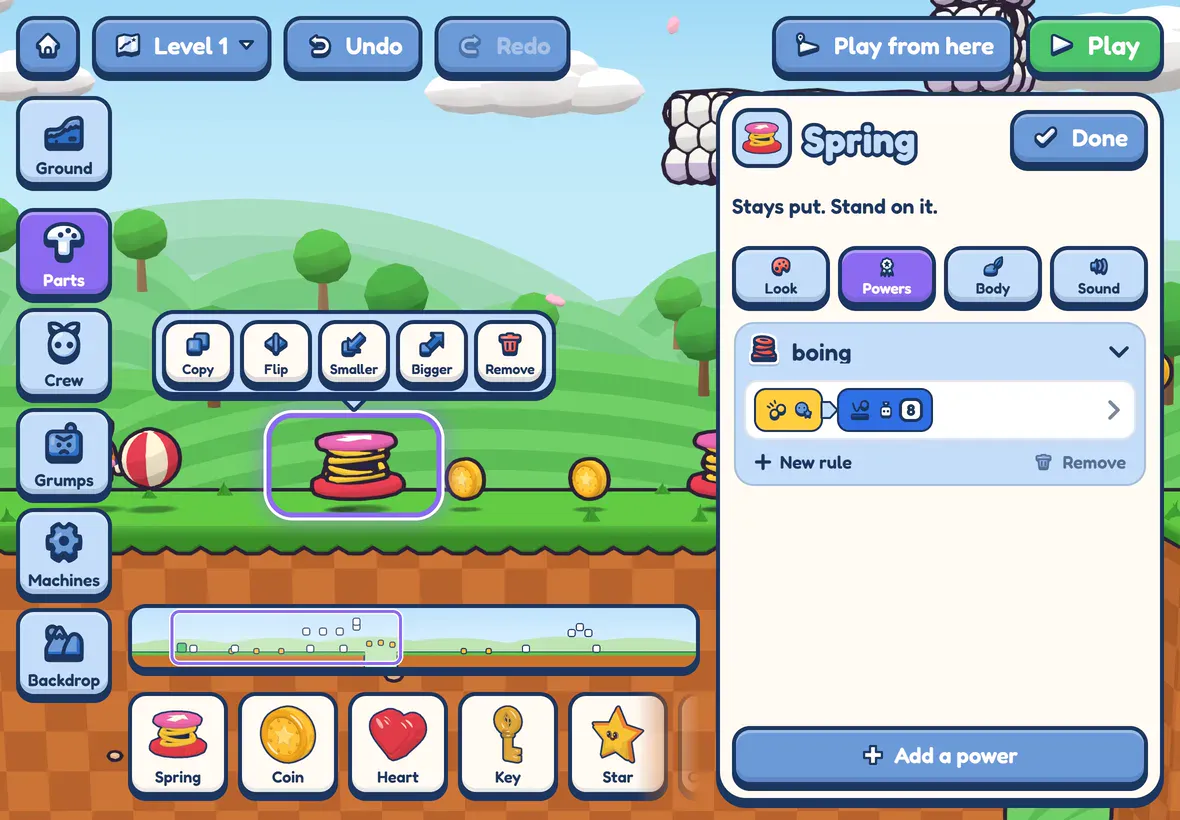
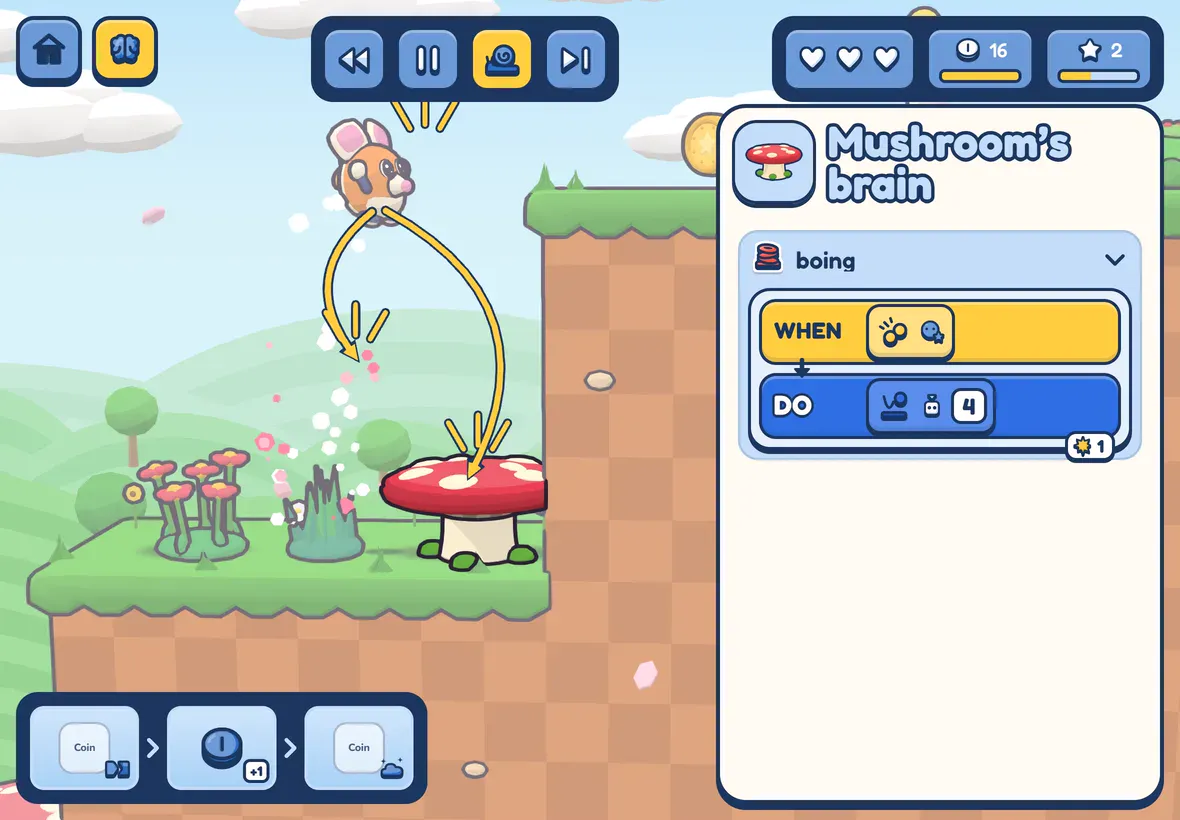
A rule in Game Creators Club is a row of picture tiles. WHEN Kip bumps the mushroom, DO bounce Kip up 4. The WHEN is a picture of a bump. The DO is a picture of a bounce, and the 4 sits on a dial. The app can read any rule aloud, too, so a child who can’t read yet can hear it.
That rule is a real event handler, and the 4 is a real parameter. The child doesn’t need those words yet. They need to see that the mushroom does something because a rule says so, and that they can change the rule.
Start from something that already works
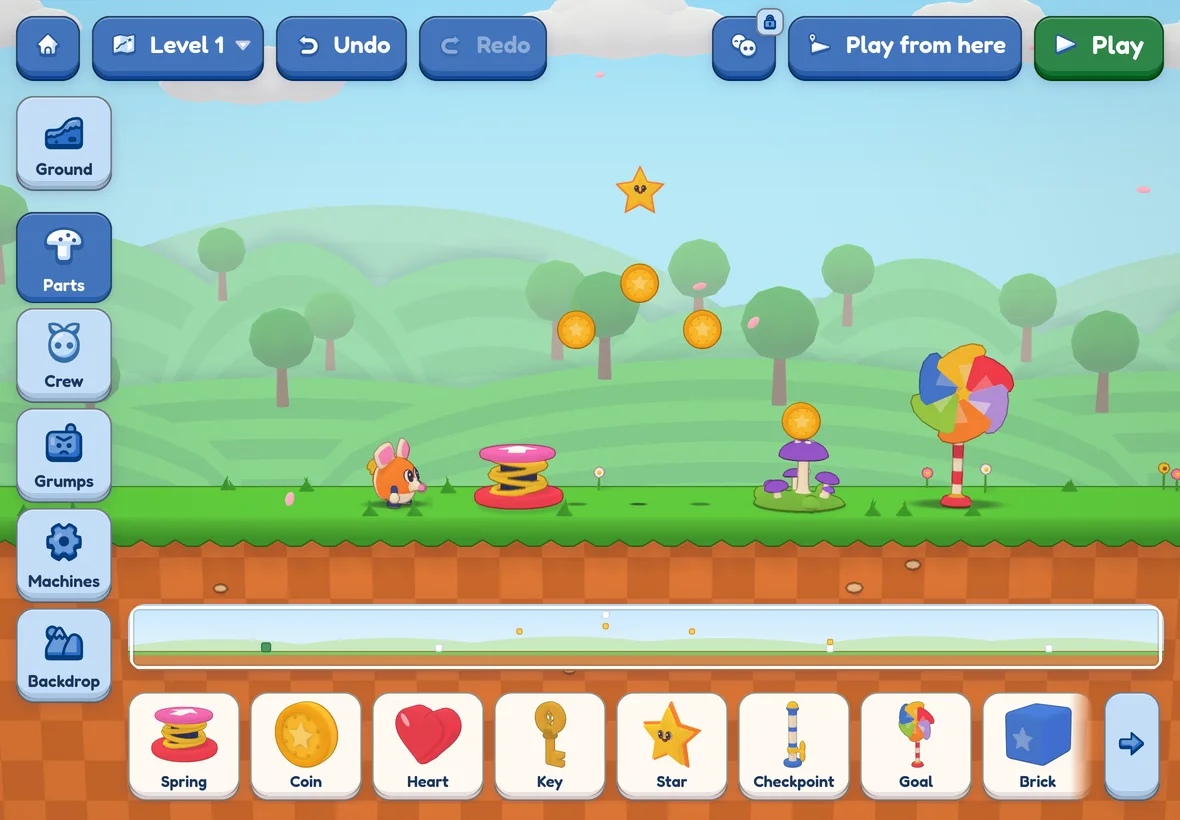
A blank page asks a five-year-old to invent a game before they know what a game is made of. So every lesson starts with a real level that plays, and something in it is missing or broken. The child plays it first, then opens the game’s brain and watches each rule light up as it fires.
Only after that do they fix it. By then they know what the level is supposed to do, so they can tell whether their fix worked.
One change, one result
Young kids learn by trying, so the trying has to be cheap. Turn the dial from 3 to 6 and the spring throws Kip higher, right away. Nothing has to be compiled, saved or restarted. When a change shows the moment you make it, a child starts to experiment: too low, too high, just right.
That loop of guess, try and look is the same one professional programmers work in all day. Kids can start it at five.
Let the game be the judge
When a fix is right, the level says so, because the game itself runs and works. There is no quiz and no grown-up marking it. A child who gets Kip onto the ledge knows they did it, and knows why.
What a grown-up can do
Sit beside them for the first few minutes. Ask what the rule says, and what they think will happen if they change the number. Then let them be wrong a few times. Being wrong, and then seeing why, is the lesson.
If you want to see what they did when you weren’t there, GCC Parents shows you each week: what they made and the coding ideas they used.